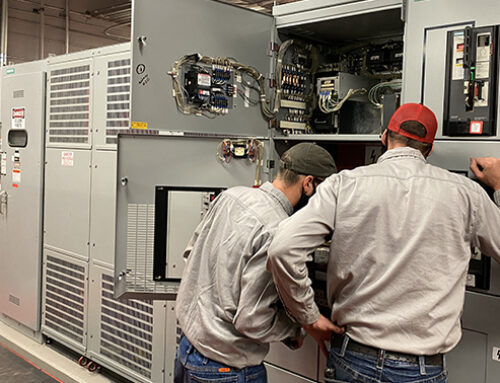
Field service teamwork helped resolve a technical challenge around current transformer placement relative to the equipment design on a solar field project.
When challenges stack up on a job site, the true measure of a team isn’t whether problems arise; it’s how the team responds when they do. A recent solar field project is a prime example of exactly that and a testament to the core value of Customer Obsession and Performance that drives Group CBS companies.
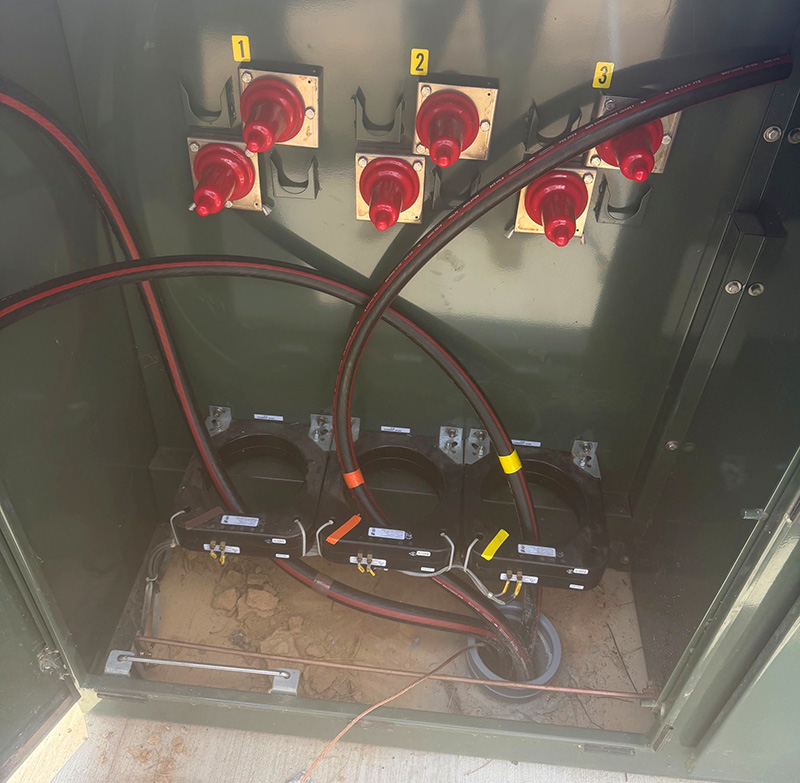
CBS Field Services brought Premier Power Maintenance on as a key partner to terminate three sets of medium-voltage conductors. From the start, the team was working against real pressures: ensuring the customer had the right materials, holding to a tight schedule, and resolving a technical challenge around current transformer placement relative to the equipment design. Through close collaboration, the team worked through each issue and landed on solutions that met the customer’s needs while maintaining safety and reliability.
The biggest test came at the customer’s gang-operated air brake (GOAB) switch. The team hung the switch and made terminations at the pole, but then things got complicated. During the cable landing process, cables broke under the strain of the horizontal connection required by the design. It was a serious setback, but it’s what happened next that defines this story.
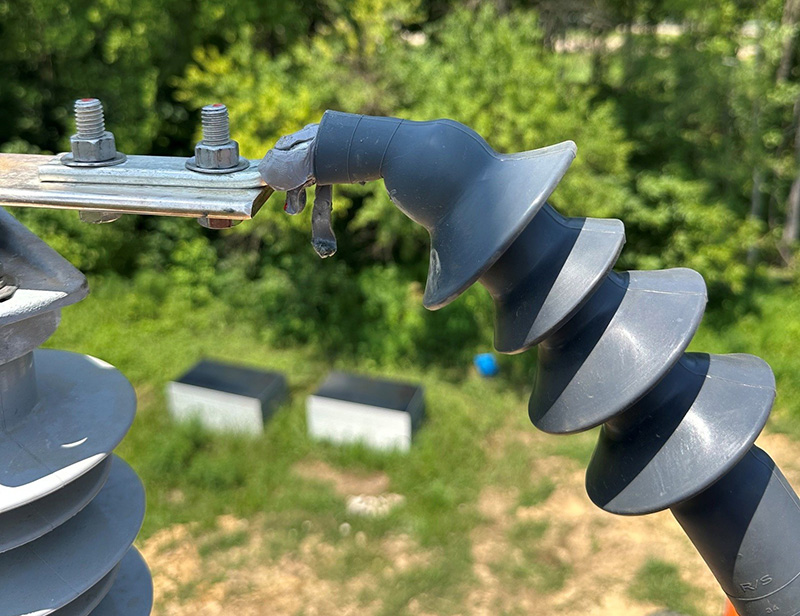
The crew mobilized again. The customer provided new cold shrink terminations for the cables, and Premier Power Maintenance brought its own 90-degree bus work to the table. This bus allowed connections to be made vertically and inline, relieving bending strain at the terminal and producing a cable system that everybody could be proud of. The customer was pleased, and more importantly it felt supported every step of the way.
This outcome belongs to a group of people who refused to let obstacles become excuses:
- Austin Reynolds brought a customer-service-focused approach to coordinating logistics, managing expectations, and working through the current transformer (CT) placement challenge with steady professionalism.
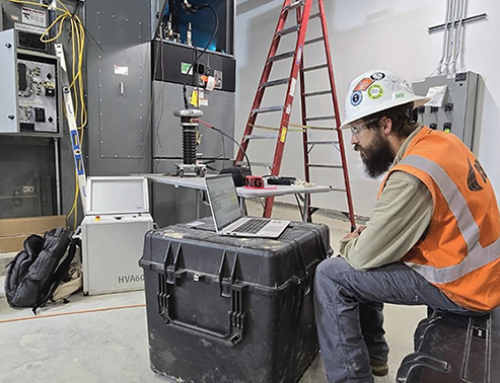
- Xavier Wickliff made sure the cables were properly tested during the repair, a critical step in delivering something the customer could trust.
- Brad Moore orchestrated the return mobilization with the kind of calm, effective leadership that turns a difficult situation into a win.
- Anthony Phillips, Jeff Martin, and Paul Lehman were on the ground from day one and came back to the site to execute the final terminations. Their continuity and commitment across both mobilizations made a real difference.
This is what the CBS Field Services and Premier Power Maintenance partnership looks like at its best. It’s the kind of work that earns lasting client loyalty, and it’s the standard we carry into every project ahead. Congratulations to the whole team.
When you have a challenging project, our teams provide everything from testing and maintenance to commissioning and protection and controls services to get the job done. Contact us today to discuss your requirement.